Over drinks this weekend with old friends running DTC independent sites and SaaS businesses overseas, everyone was complaining about the unbearable cost of customer acquisition. I naturally brought up a new channel I’ve been monitoring closely: ChatGPT Ads. Honestly, I started researching it while looking into generative engine optimization for my own AI product, and ended up discovering something far more complex but also much more intriguing than expected.
Many people assume this is just search advertising with a new skin, but that’s completely wrong. It doesn’t care which keywords you’ve bid on, nor does it use the traditional audience tagging approach of feed-based advertising. Instead, it focuses on user intent within conversations. Imagine this: a user hasn’t opened any shopping websites or searched for reviews, but directly asks in the chat interface: “Which of these two robot vacuums is better for pet owners?” Your ad then appears below the response, contextualized within this conversation. In marketing terms, this is called front-of-decision-chain interception. For 3C electronics, B2B SaaS, or niche independent sites, this traffic with strong purchase intent is incredibly high quality.
However, as businesspeople, we can’t just look at the story – we need to look at the numbers. OpenAI began testing ads in late January this year and officially launched the pay-per-conversion CPA model in June. Initially, CPM quotes reached as high as $60, carrying that “take it or leave it” scarcity vibe. But just a few months later, overseas media reported actual transaction prices have been halved to between $25 and $45, with minimum entry thresholds plummeting from $250,000 straight down to $50,000.
Don’t rush to mock OpenAI’s seemingly failed launch – this is actually the platform testing market limits. Netflix also started high when introducing ads, but they were transparent: watch ads for a cheaper subscription. ChatGPT is different – its core experience is delivering direct answers. Once commercial content gets mixed in, users start wondering: is this recommendation AI-generated or paid for? This trust discount, combined with OpenAI’s urgent need to expand advertiser bases for global rollout, naturally pushes prices down. Lower thresholds mean small and medium sellers can finally enter the game.
Lower Barriers, But Don’t Fail at the Basics – Payment Card Setup
The $50,000 threshold has certainly tempted many teams, but while helping several friends open accounts recently, I discovered everyone gets stuck at the most basic payment stage. OpenAI’s payment risk controls for advertising accounts are extremely strict – credit cards issued in China are basically rejected instantly. Even if you manage to get a regular overseas physical card, once you start running CPA campaigns, high-frequency, large-amount charges easily trigger bank risk controls. Minor issues mean failed payments; severe cases result in immediate advertising account bans, wasting all your creative materials and pixel data.
When running ads on overseas platforms with strict risk controls, never use personal physical cards to force your way through. Always use high-authority virtual credit cards. I generally configure VCCs specifically optimized for advertising charges for my team. These cards not only support native USD settlement, but more importantly, have clean BIN codes and support custom billing addresses. When running CPA tests, I use different virtual cards to bind different sub-accounts for physical-level anti-association isolation. Even if one account gets restricted due to creative issues, it won’t cause a complete collapse due to payment card association. Quality VCC channels can perfectly bypass OpenAI’s payment verification, ensuring smooth advertising expense deductions so you can focus entirely on monitoring ROI instead of constantly contacting customer service to unfreeze cards.
Don’t Fixate on CPC – New Channels Amplify Your Growth Judgment
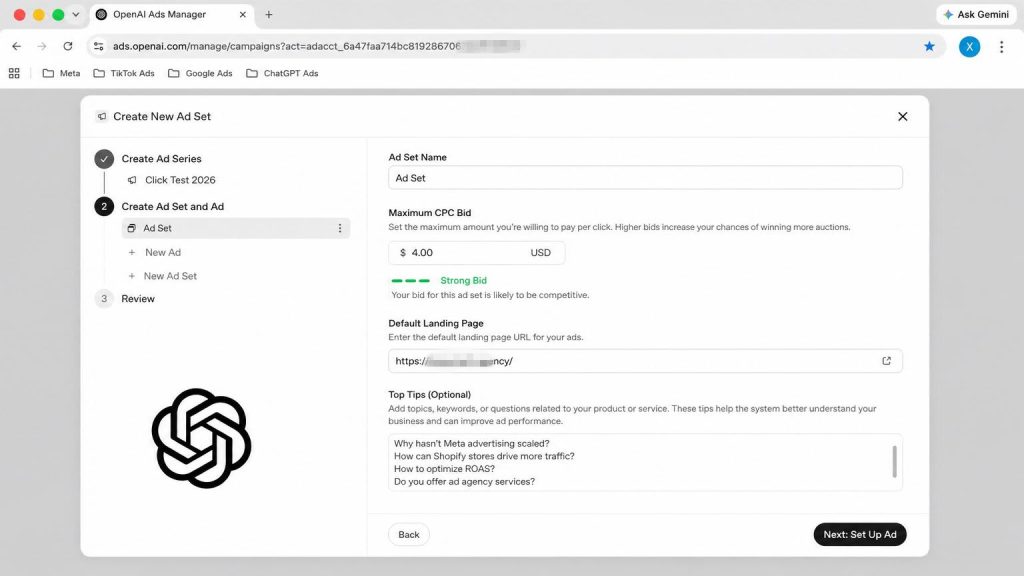
Once payment and account security are resolved, let’s discuss how to advertise. Many teams, when seeing new channels, habitually focus on click-through rates first – this puts the cart before the horse. ChatGPT Ads’ core is CPA; you need to track whether users who click actually register, leave contact information, or enter purchase pathways. If your deep conversion attribution chain isn’t properly set up, all you’ll see is false prosperity data.
Additionally, don’t just copy creative materials directly from other feed advertising platforms. In a conversational interface, hard advertising appears extremely out of place. Your copy and landing pages must follow the user’s conversational context, providing solutions rather than just sales pitches. New channels certainly offer opportunities, but what ultimately succeeds still depends on your team’s original growth judgment and product foundation.
The Next Decade: From Being Searchable to Being AI-Recommended
Over the past decade, cross-border sellers competed to make users find you. Over the next decade, the competition will be getting AI to recommend you. Traffic entry points are changing, tactics are evolving, but the underlying logic of solving trust and payment channels remains unchanged. While prices have fallen and entry barriers lowered, prepare your payment tools, test with small steps and quick iterations, and you might just secure a winning hand in the next global traffic reshuffle.