In an increasingly globalized digital economy, the need for flexible and privacy-conscious cross-border payment solutions has never been greater. FotonCard emerges as a compelling option in this space, offering virtual credit card services tailored specifically for international transactions. Unlike traditional financial platforms that demand rigorous identity verification, FotonCard distinguishes itself by eliminating the Know Your Customer (KYC) requirement, making it particularly appealing to users who prioritize anonymity and operational efficiency.
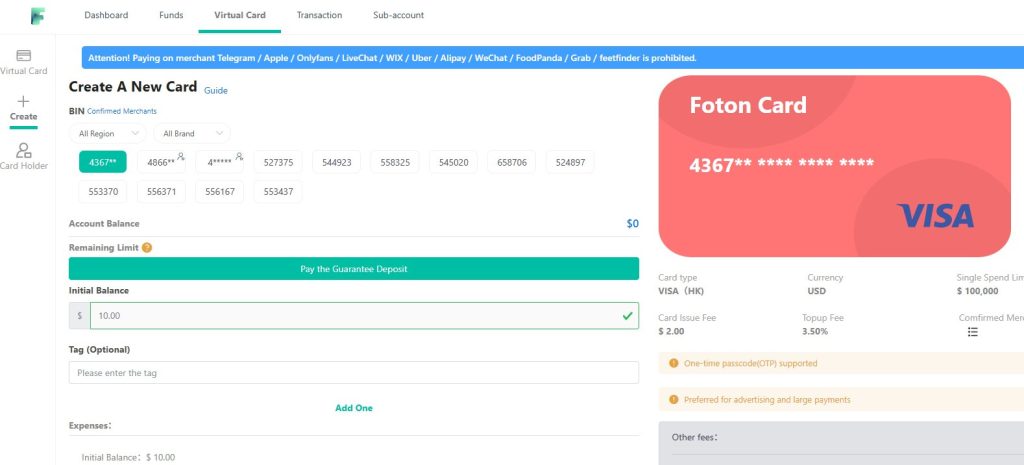
The platform’s core value lies in its versatility. Whether you’re managing advertising budgets on Facebook, TikTok, or Google Ads, subscribing to premium services like ChatGPT Plus, or conducting e-commerce operations, FotonCard provides a seamless payment gateway. Its support for USDT deposits further enhances its appeal to cryptocurrency users, bridging the gap between decentralized assets and conventional online spending.
From a usability standpoint, signing up and activating a virtual card is straightforward and largely self-service. Users can fund their accounts through various methods, including bank transfers and USDT withdrawals. While there are fees associated with card issuance and top-ups, many users find these costs reasonable, especially for small-scale or one-time transactions. One notable feature is the ability to choose different card prefixes (the first six digits of the card number), allowing merchants and individuals to tailor their payment profiles according to specific merchant requirements or regional preferences.
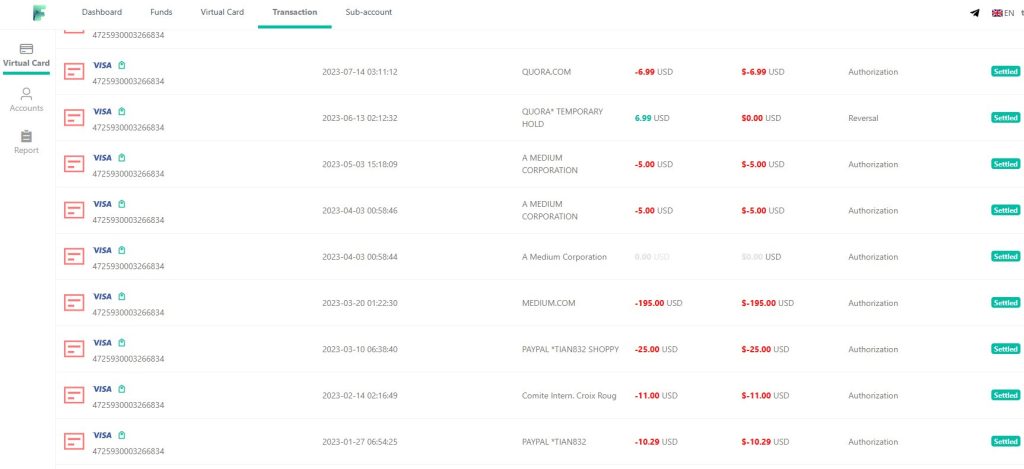
Privacy remains a strong selling point. By skipping KYC procedures, FotonCard enables users to maintain a higher degree of confidentiality. However, this advantage comes with trade-offs. The lack of identity verification may complicate dispute resolution or transaction reversals in certain scenarios. Therefore, users should carefully consider their risk tolerance before relying solely on such a service.
User feedback suggests mixed but generally positive experiences. Many report stable performance, particularly in low-value contexts such as cloud service payments for small manufacturers or micro-subscriptions. Nevertheless, isolated incidents of deposit failures or card declines have been noted, highlighting the importance of staying updated with real-time user reports and platform status.
In conclusion, FotonCard represents a valuable tool for those seeking anonymous, crypto-friendly, and efficient cross-border payment options. It excels in convenience and flexibility but requires prudent evaluation based on individual needs and risk appetite. As with any financial service, due diligence remains essential. For businesses and freelancers operating in dynamic digital markets, FotonCard offers a practical middle ground between regulatory compliance and operational agility.